ELIOT F. NOYES
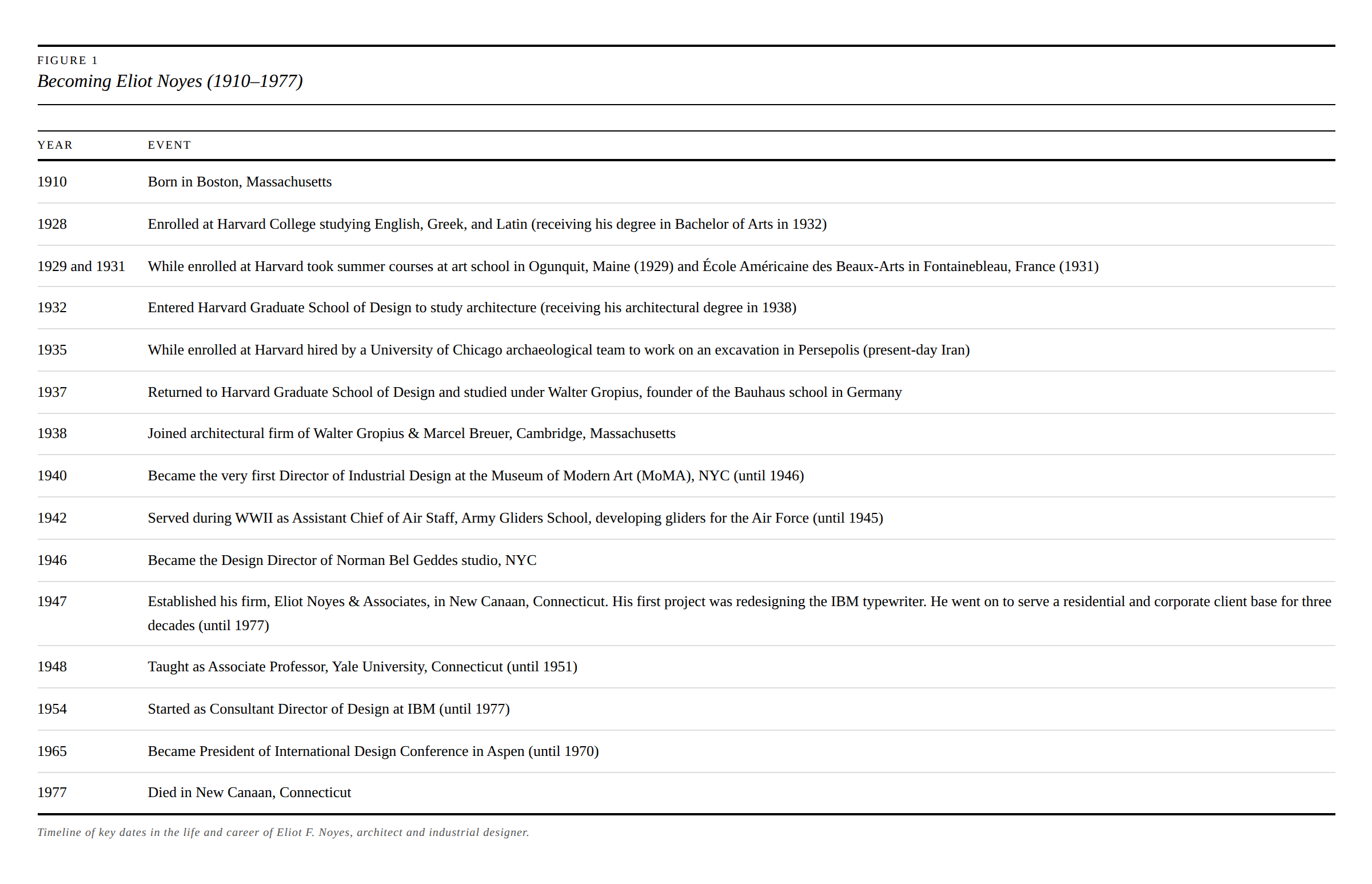
Eliot Noyes was a pioneer of modern design and one of the most versatile creative forces of his time. He pushed the boundaries of what architecture is and the role it plays in our lives, and he shaped how the United States looked in the post-war world through his work in both residential and corporate design. At the core of this work were the Bauhaus principles and the belief that all of design is ultimately of a piece.
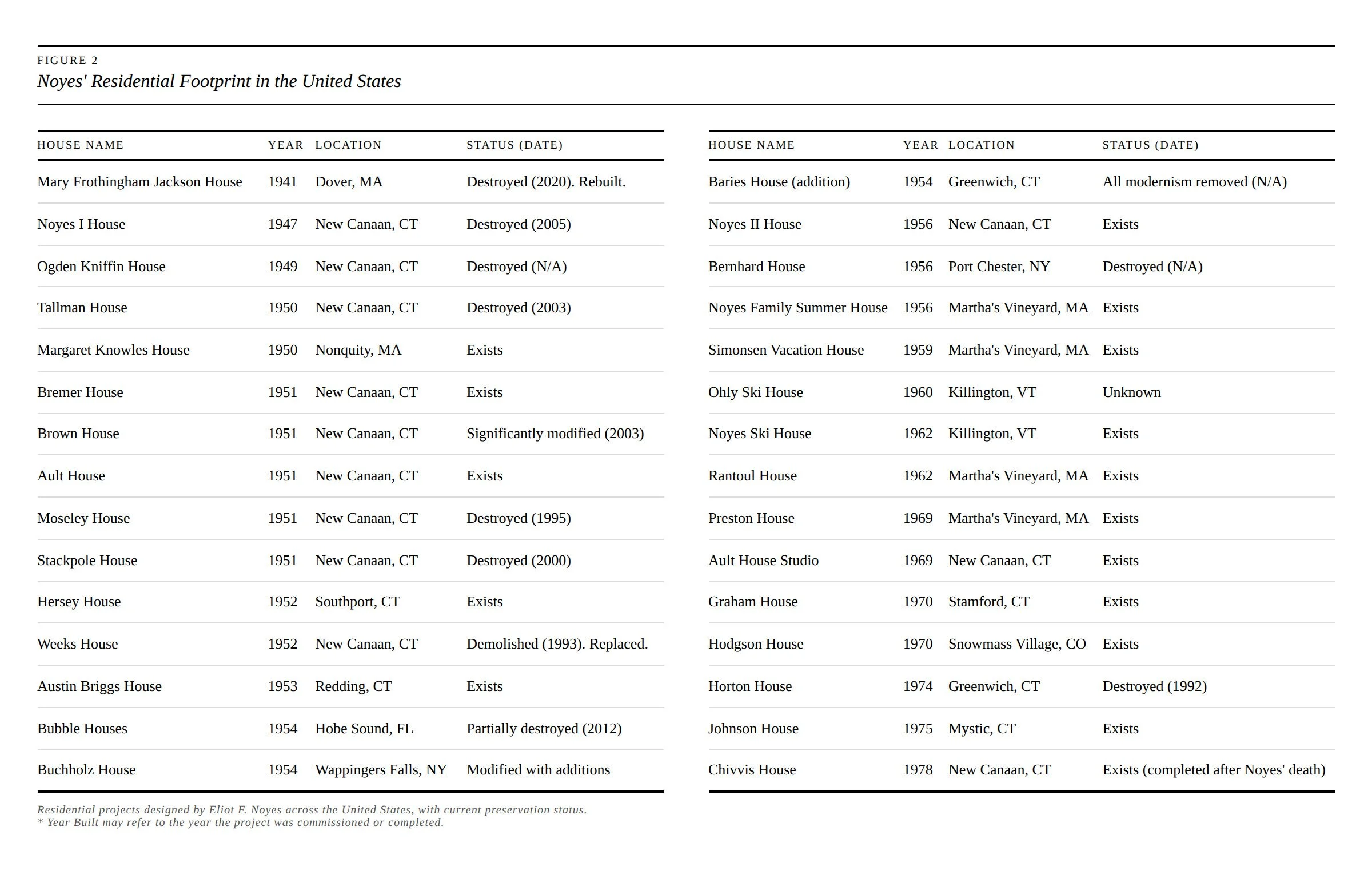
Noyes’ residential architecture redefined the relationship between buildings and nature, bringing nature to the center of the home. His architectural style is known for incorporating simple geometric forms. Natural materials such as fieldstone and wood, and large glass walls dissolve the boundaries between interior space and the surrounding landscape. His residential designs typically consist of horizontal pavilions with open plans and a balance of privacy and openness. They solidified Noyes’s reputation and ability to translate modernist concepts to warm residential spaces, turning them from ordinary family houses into living galleries for art.
Noyes believed design was fundamental to expressing a company's identity and technological leadership - a radical idea in the corporate world of the 1950s. Nowhere was this more evident than at IBM, where he built the company's first-of-its-kind corporate design program from the ground up, shaping not just individual products but the corporation itself - its architecture, graphics, and industrial design alike. This work cemented his place as arguably one of the most important industrial design executives in American history and laid the groundwork for the design-driven brands we recognize today, from Nike to Apple.